UltraMax 400 in Mount Rainier National Park

Context:
In September 2025, I traveled through Seattle to Ashford, Washington for a hiking trip in Mount Rainier National Park. Before leaving, I purchased a roll of Kodak UltraMax 400 to use in my Pentax camera.
At the time, I was relatively new to film photography and only dabbled in the hobby occasionally. I didn't put much thought into which film stock I bought or how that choice would affect the colors, grain, contrast, highlights, or shadows in my images.
Today, choosing a film stock is one of my favorite parts of the process.
Before every trip, I spend hours researching both the destination and the films I might bring. I think about the colors, the quality of light, and the mood I want the photographs to convey. Then I search for a film stock that complements the environment while also matching my creative vision.
I'm not entirely sure what sparked this obsession. Maybe it was a desire for greater creative control. Maybe it was a curiosity to experiment. Or maybe I simply enjoy the research process as much as I enjoy making photographs.
Whatever the reason, it eventually led me to create this website. My goal is to build the resource I always wished existed: a visual catalog of real film stocks in real locations, using unedited photographs to show how each film performs under different conditions.
When I purchased this roll of UltraMax 400, the salesperson recommended it for its vivid colors, fine grain, and forgiving exposure latitude. At the time, those characteristics didn't mean much to me. Looking back, that conversation opened the door to an entirely new way of thinking about film photography.
Suddenly, I was just as excited to see how the film rendered a scene as I was to photograph it in the first place.
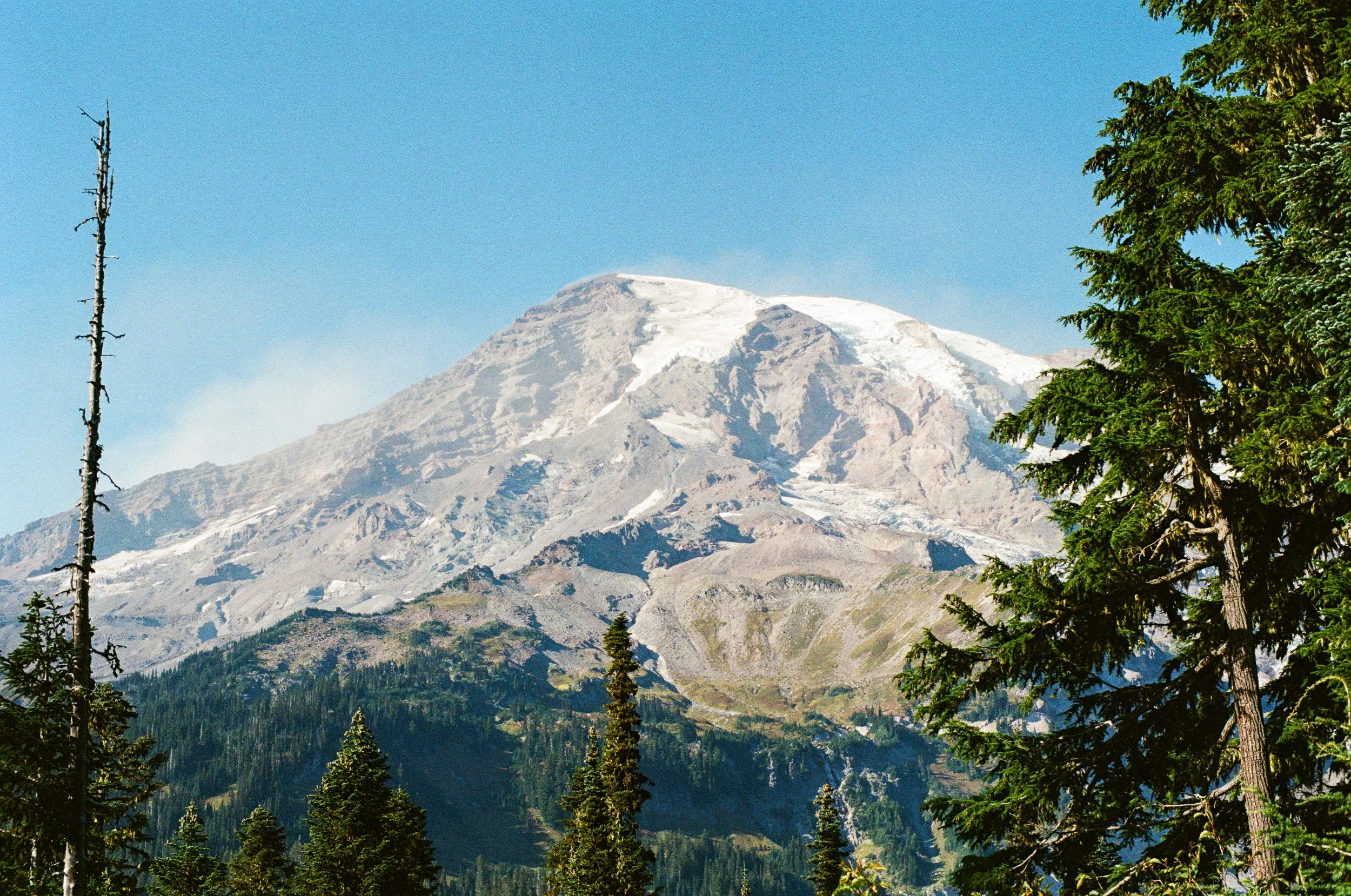
Mount Rainier, Fall 2025
Conditions:
Mount Rainier in early fall is a beautiful place to photograph. The afternoons are warm in the sunlight, but temperatures drop quickly in the shade and after sunset. I began shooting in the late afternoon, as the sun was already starting its descent behind the surrounding peaks.
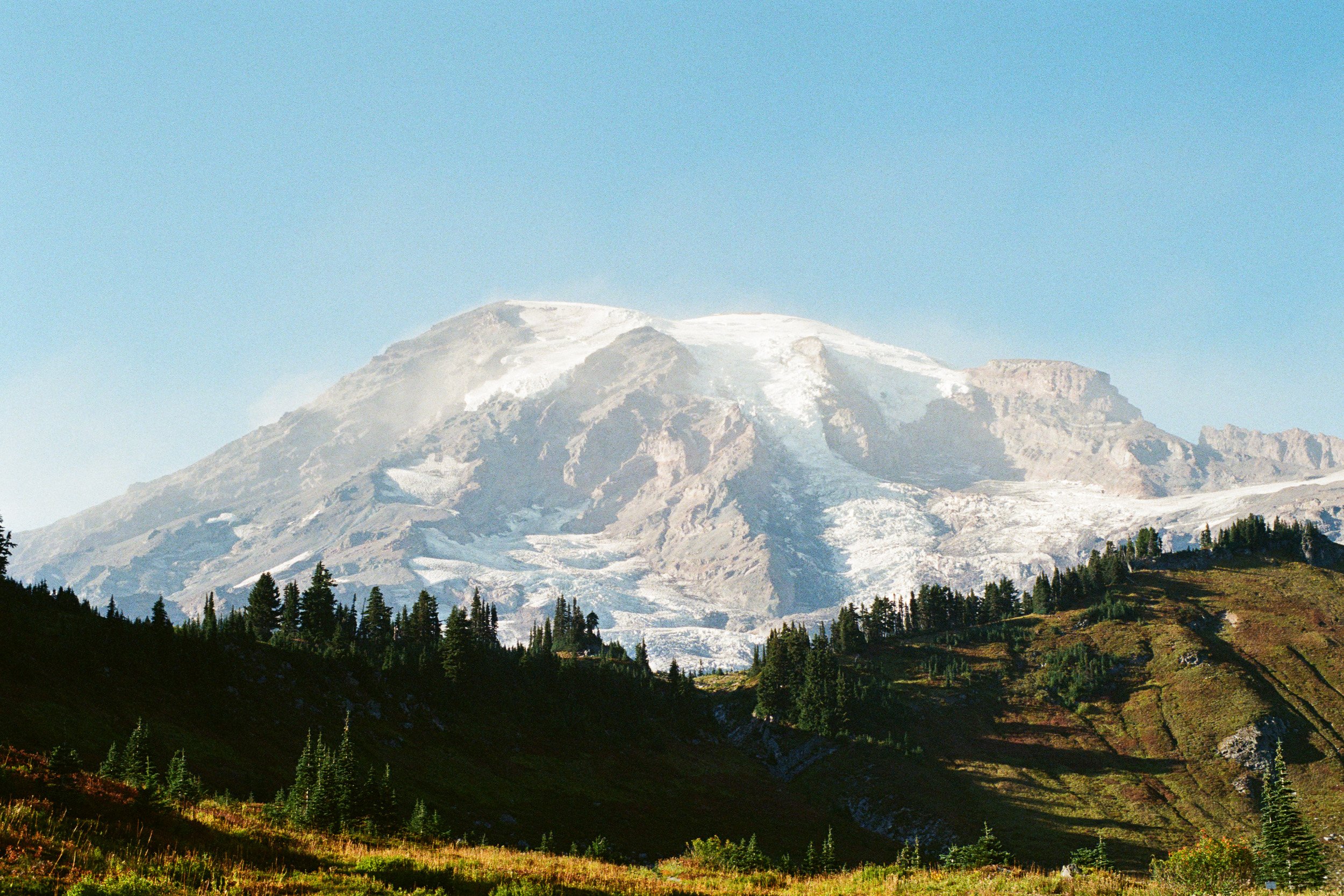
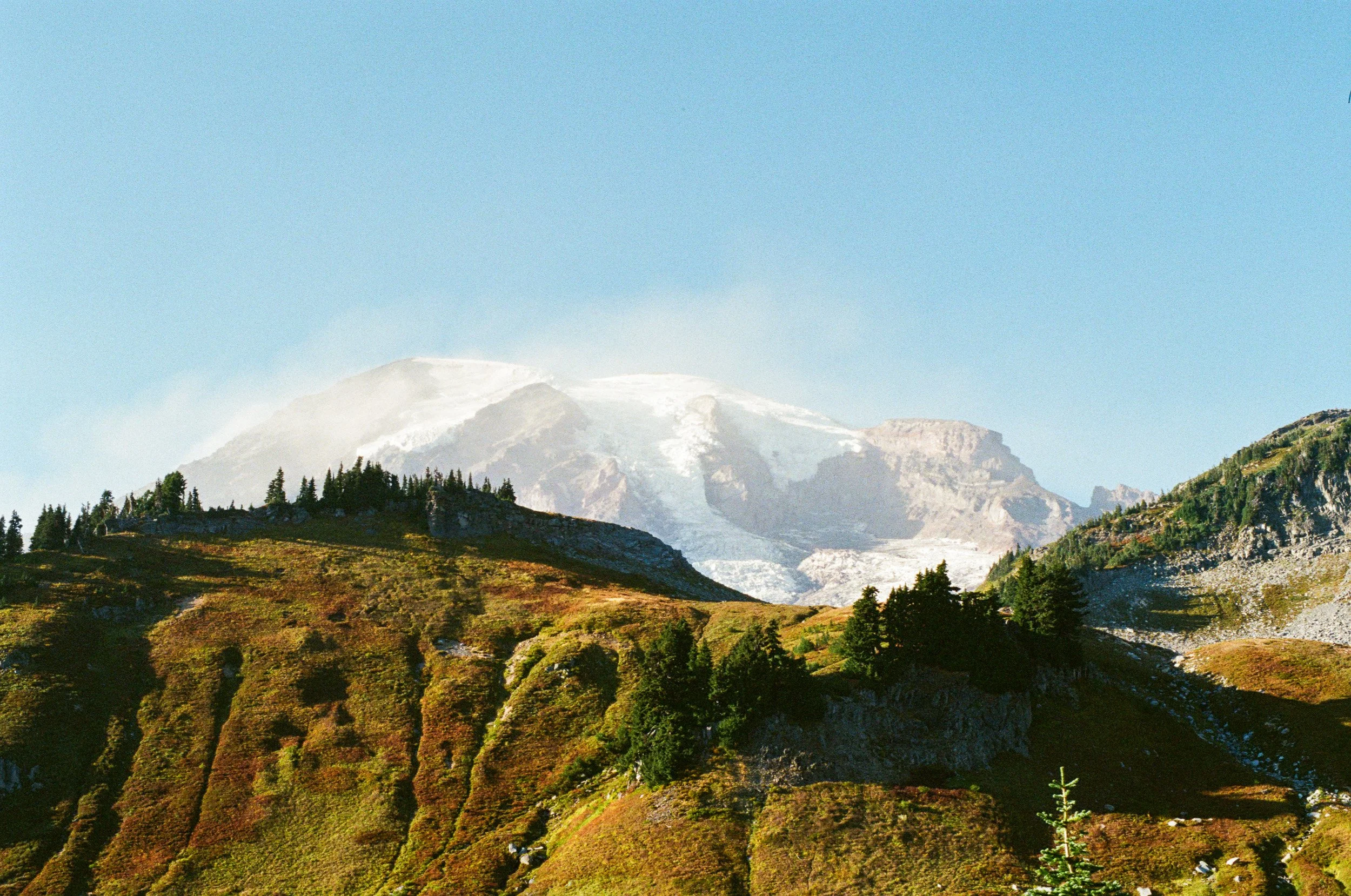
The lighting conditions were challenging in the best possible way. Deep shadows filled the valleys and forests, while the snow-covered summit of Mount Rainier stood bright against a clear blue sky. It was the kind of scene that tests a film stock's ability to handle contrast and preserve detail across a wide range of tones.
As I looked through the viewfinder, I remembered the camera salesperson describing UltraMax 400's forgiving exposure latitude. For the first time, I found myself wondering whether a film stock could actually influence the final image as much as the landscape itself.
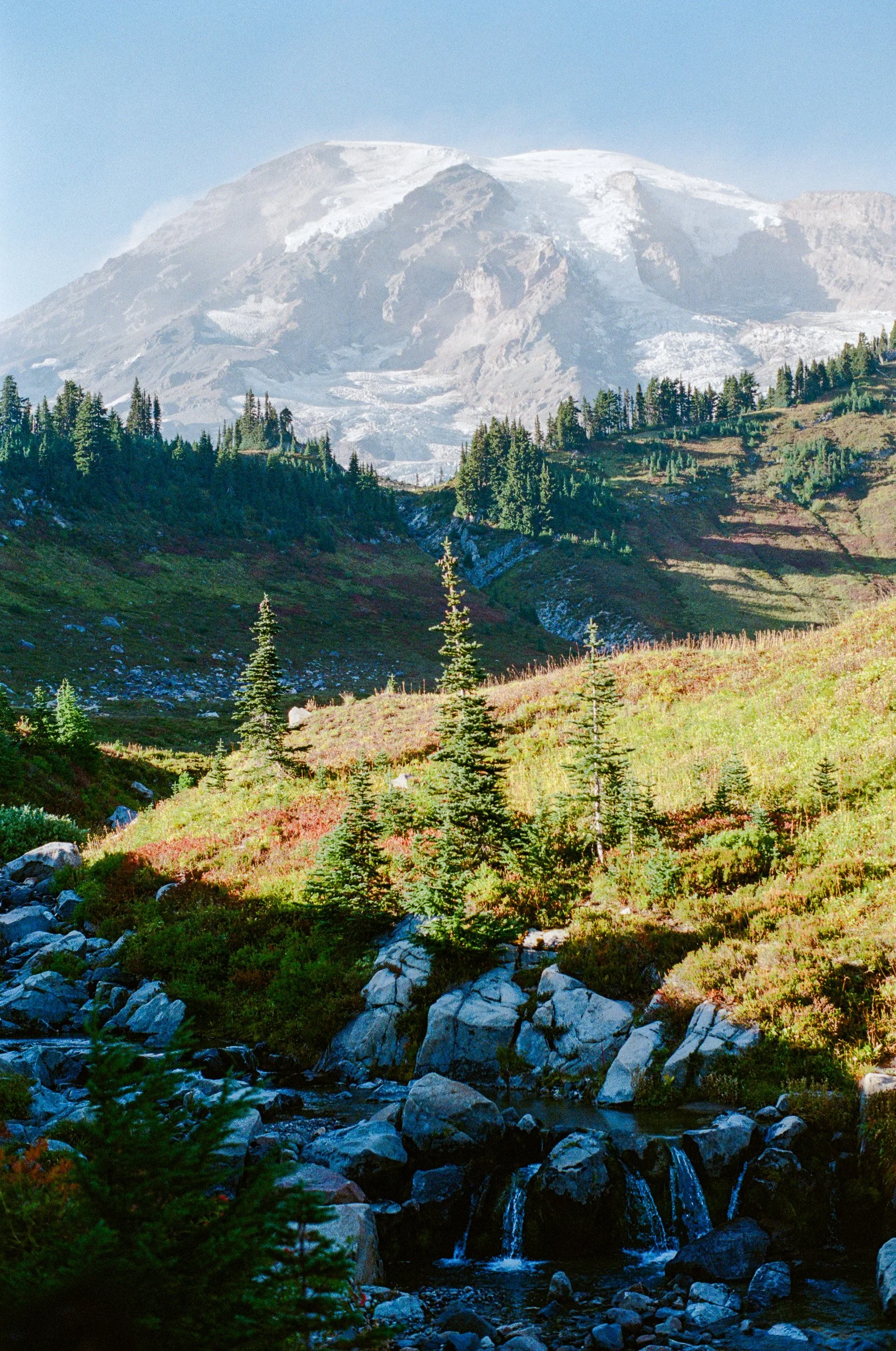
Looking back at the scans, I was impressed by how well UltraMax handled the scene. The film retained detail throughout the image, from the cool blues of the glacial water to the deep greens of the surrounding hillsides and the bright snowfields near the summit. The result feels balanced and painterly, with no part of the landscape demanding attention at the expense of another.
Shooting Experience:
I shot these images at box speed, rating UltraMax 400 at ISO 400 as recommended. As a newer film photographer at the time, my goal was simple: center the light meter and aim for a “correct” exposure.
Looking back, this reflects my early misunderstanding of how much exposure latitude this film actually had. In high-contrast scenes, especially when the sky was bright or the subject was backlit, I often relied too heavily on the in-camera meter without adjusting for the scene.
In many cases, I should have been exposing more for the shadows, letting more light into the image to preserve detail in the darker areas. With a film like UltraMax 400, this kind of overexposure is not only safe, but often beneficial for retaining information in shadow regions.
At the time, I didn’t fully understand this idea of “metering for the shadows.” My camera’s light meter averages the brightness of the entire scene, which works well in balanced lighting but becomes less reliable in high-contrast environments like Mount Rainier in late afternoon light.
For clarity, overexposing by one stop simply means allowing twice as much light to reach the film. For example, opening up from f/8 to f/5.6.
In several of these frames, you can see the result of my cautious metering approach: the sky is well controlled, but the foreground, subject, and surrounding landscape fall deeper into shadow than they likely would have if I had exposed more generously for the darker areas of the scene.
Results:
The results from this shoot were largely positive. This film produces a distinctive pop-art aesthetic thanks to its high saturation and strong contrast. Additionally, the pronounced grain adds a classic film character, while the warm color palette enhances the nostalgic feel.
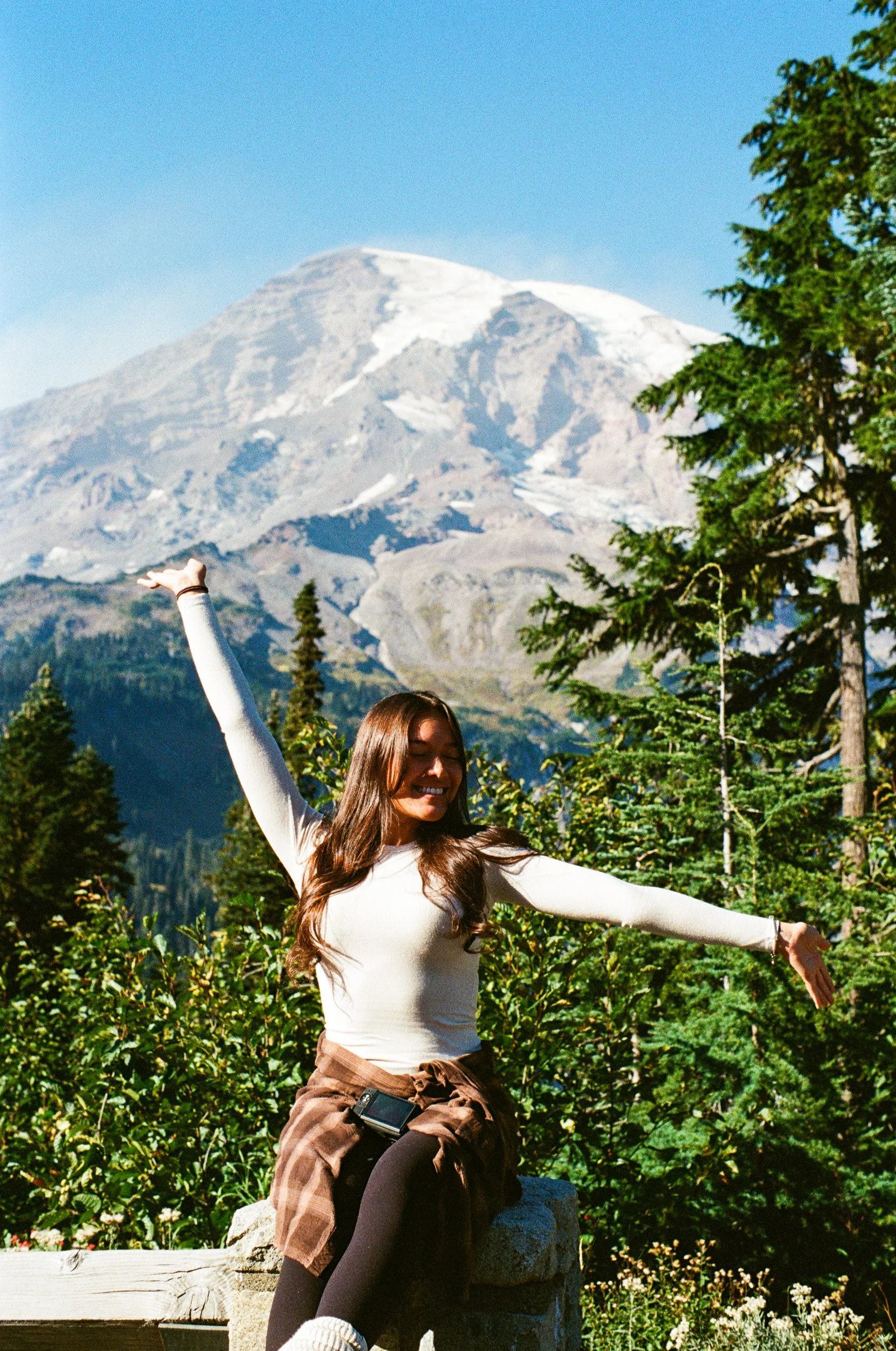
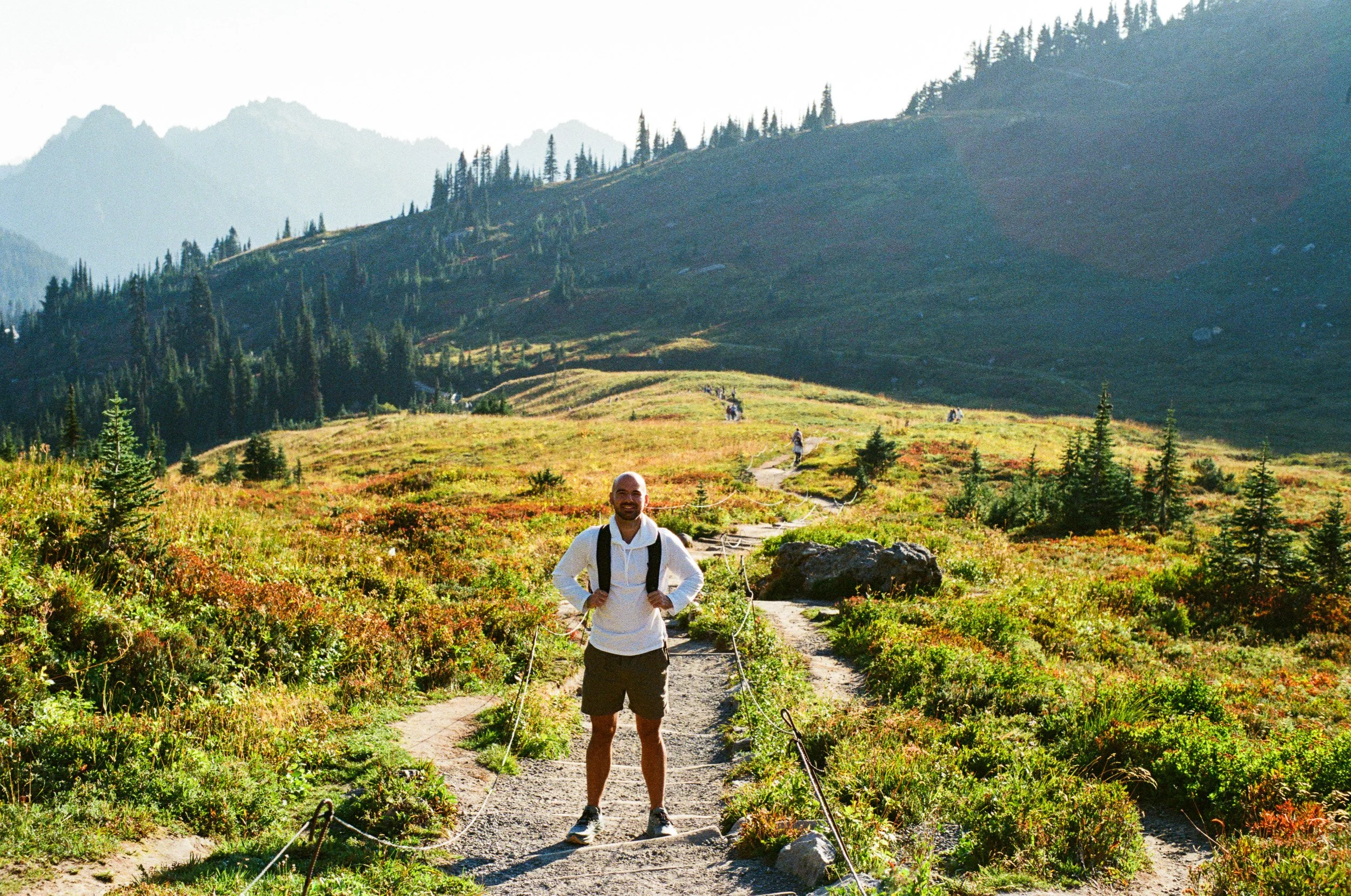
This portrait is a great example of the punchy, almost cartoon-like quality this film can create.
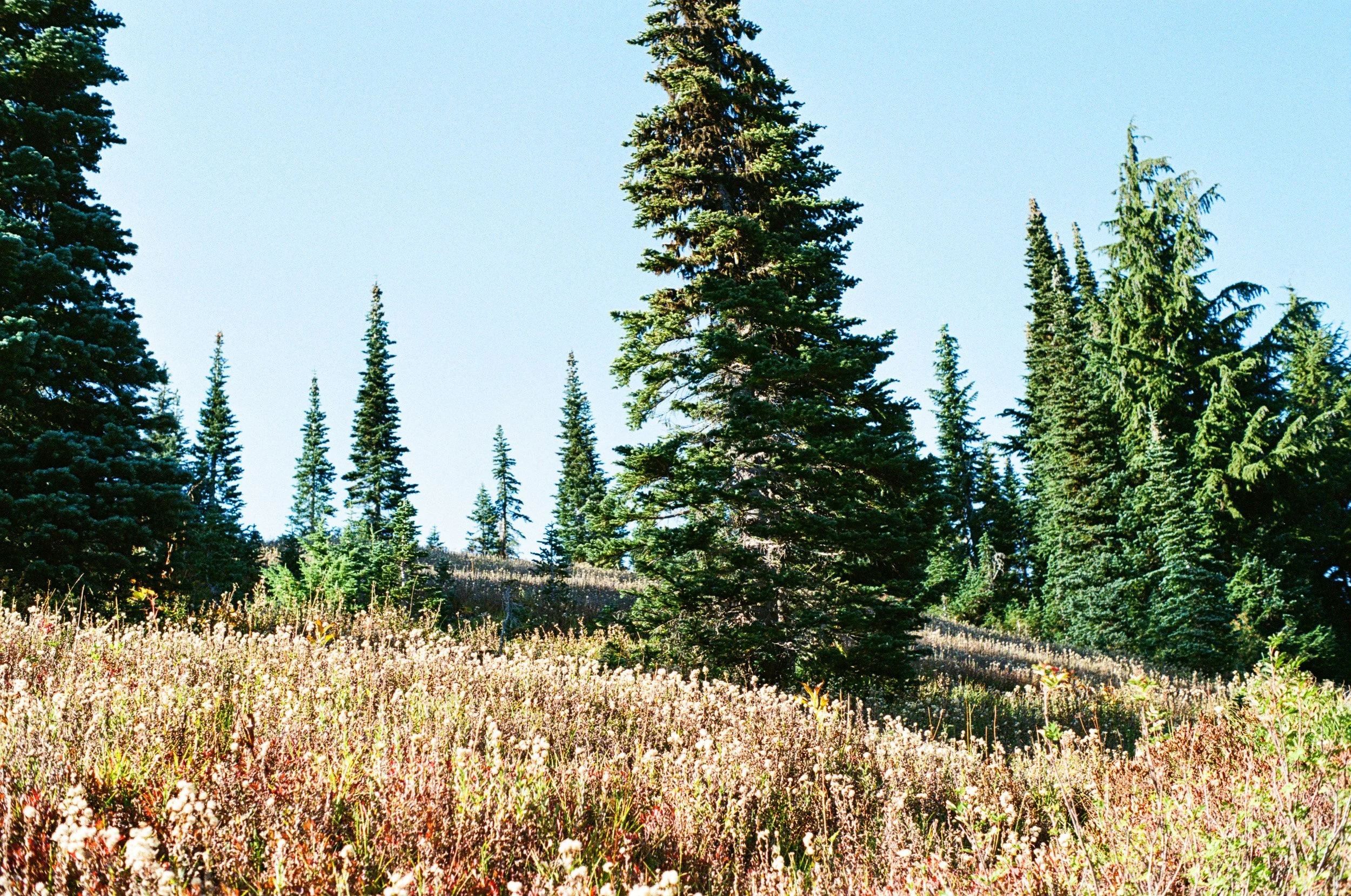
Skin tones tend to render warmer than life, but that wasn't a major concern since close-up portraiture was not the primary focus of this shoot. In natural settings, the film beautifully captured the greens and yellows of Mount Rainier, conveying a sense of warmth and invitation that felt almost Disney-esque. At times, it genuinely felt as though we were wandering through an enchanted meadow, and the film did an excellent job of preserving that atmosphere. Overall, this film is more stylized than subdued, with punchy colors that are undeniably fun to look at.
Spruce trees in Mount Rainier National Park, Fall 2025
Final Verdict:
It's important to note that this look can sometimes feel repetitive and a bit consumer-grade. What you gain in vibrant color and punchy landscapes, you lose in subtlety and dream-like character. I would be curious to see how Portra 400 performs in the same environment—a film stock with equal, if not greater, exposure latitude and famously beautiful highlight rendering.
With UltraMax, nearly every frame delivers the same immediate visual gratification. Portra, by comparison, often feels more nuanced, with each image resembling a distinct scene pulled from a memory. I wouldn't change a thing about choosing UltraMax for my first serious landscape shoot, but the experience has left me eager to return to this environment with a deeper understanding of how different film stocks render the same scene.
Overall, this film is an excellent choice for beginners who want instantly appealing results. It's the kind of film that looks unmistakably "film" when you're sharing photos from a trip with friends and family. I would happily bring another roll to destinations like The Bahamas, where its vibrant colors and cheerful rendering would likely shine just as brightly.
Where to Buy?
UltraMax 400 is one of the easiest film stocks to find locally. For those who prefer shopping online, I've included a link HERE.
